


Translations in Indigenous Languages
The COVID-GEA Project engaged Indigenous communities in both Alaska and the Nenets Region. To support Arctic Indigenous languages, the project translated selected materials into Nenets and Inupiaq, providing written, audio/video formats in recognition of oral traditions. Nenets materials are available here, and Inupiaq translations are provided below.

Iñupiaq, an Alaska Native Language
The COVID-GEA Project translated the selected project materials presented below into the Inupiaq language. Iñupiaq is one of the 21 officially recognized languages of the State of Alaska and remains among the most widely spoken Alaska Native languages. A majority of the Indigenous research participants in the COVID-GEA research were either originally from, or had ancestral ties to, the Seward Peninsula—an area where Inupiaq is widely spoken.
Key themes and selected quotes from their interviews have been translated into Inupiaq and are presented below. Based on the study region, we employ Seward Peninsula Inupiaq, the Kigiqtaamiutun dialect.


Krauss, Michael, Gary Holton, Jim Kerr, and Colin T. West. 2011. Indigenous Peoples and Languages of Alaska. Fairbanks and Anchorage: Alaska Native Language Center and UAA Institute of Social and Economic Research. See here.
In collaboration with the Alaska Public Interest Research Group (AKPIRG), this translation in Inupiaq was undertaken not as a individual effort, but through the collective work of the Iñupiaq (Inupiaqtun) Language Panel, in accordance with Alaska Native Language Translation Protocols. The materials were translated by Georgianna Oonak Merrill, a Language Panelist, and videos were voice-dubbed by Annauk Olin, an Inupiaq language educator and a tribal member of the Native Village of Shishmaref.
Given the central role of oral tradition in Alaska Indigenous languages, we incorporated video recordings in addition to the written format. Notably, translation from English to Inupiaq is not always word-for-word because the languages differ significantly not only in structure and grammar but also in cultural meaning, requiring conceptual rather than literal translation.
The COVID-GEA project recognizes the importance of preserving Indigenous Peoples' languages. This initiative highlights how scientific projects working with Indigenous communities can also support the revitalization of Native languages.
About the COVID-GEA Project in Inupiaq

Taamna sawaaqsram siunigigai ugałghit taimaŋaqtaq aġnat Anchorage-mi, Sitnazuami, suli awatiptikni nunaaqqini Alaska-mi, uagut katinnapta avuktaavut 2022-mi.
This project features the voices of Indigenous women living in Anchorage, Nome, and neighboring villages in Alaska, whom we met in 2022.
The translated quote was voice-dubbed by interpreter Annauk Olin; video recorded by Eben Hopson; video edited by Nisha Gurung.

Their stories provide deeper insights into the COVID-19 pandemic's effects on communities in Alaska.
Ilaita qanaaluita qiniqtitaagit qanuqpiaq taavzruma COVID-19-gum kamanatuam kiiqsiutim sawiłgha nunaaqqirani Alaska-mi.
The translated quote was voice-dubbed by interpreter Annauk Olin; video recorded by Eben Hopson; video edited by Nisha Gurung.

Bringing women's voices to light will help us to remember, reflect on lessons learned and broaden our perspective about how dramatic events such as COVID-19 impact Arctic communities and women specifically.
Aġnat tamatkua ugałghit aiyiaqsrutipqaalui iġġazutaułiuqtut itqaatilui, itqaatilui ilisautit ilitaavut suli aiyiaqsrutipqaalu qanuq kamanaatuat atuqtaavut atali aa’ COVID-19-gum aqsitaagi Arctic nunaaqqit suli aġnaavalaat.
The translated quote was voice-dubbed by interpreter Annauk Olin; video recorded by Eben Hopson; video edited by Nisha Gurung.
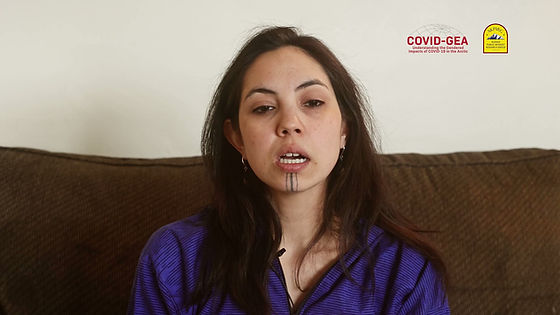
Women's voices from the Arctic must be heard to become a part of the broader history of COVID-19.
Aġnat ugałghit Arctic-min naalagliugizi aiyuiqsrutipqaalu taavzruma atuaniqtaakut COVID-19.
The translated quote was voice-dubbed by interpreter Annauk Olin; video recorded by Eben Hopson;
video edited by Nisha Gurung.
The project interviews shed light on:
Stewardship position of women:
Awalaŋa piłghuziat aġnat:

The translated quote was voice-dubbed by interpreter Annauk Olin; video recorded by Eben Hopson; video edited by Nisha Gurung.
Ilalitiłghat nutaat tumaqtaaġit tumaizruat.
-
Adaptability to new technologies.
-
Ability to keep solidarity and provide mutual support.
Atausinaq sawiłiq suli tammaqmun iggazułiq.
-
Ability to form women’s support groups and practice healing traditions.
Aġnat iġġazutikzraitnik katituat suli mamiłłigun iŋilgaan aglaan atuqtuanik tumaiłik.
-
Ability to keep and re-engage with traditional cultural activities.
Iŋilgaan aglaan taimaŋaqtanik suzragaałik tumaiłik.
-
Strengthened sense of community and belonging.
Saŋŋizraiłgha nunaaqqiraq suli ilauġainik.
Challenges for women in social domain:
Sagiknaatuat aġnat katiłghat inmigun:

The translated quote was voice-dubbed by interpreter Annauk Olin; video recorded by Eben Hopson; video edited by Nisha Gurung.
-
Intensified collective trauma and memories of the past.
Imma qaŋaaituat kamanaatuat atniutit suli itqaiłik qaaŋaituanik.
-
Increased inequality in power relationships at home.
Tammagmik atausinukłuni sawiłik kiŋuniq.
-
"Definitely an increase in domestic violence."
“Kiŋunaimi azinautiiłik atniaqnilik atugauqpaktuq.”
-
Decreased community engagement and participation in socio-cultural practices.
Katiŋnaiłik nunaaqqimi suli suzragaaqtuanun uviŋaiłik.
-
Altered in-person food harvesting and sharing traditions.
Ałłagiaŋazipłuni niġiksranik aŋułik suli aitulik autaałik.
-
Challenged female roles as community caretakers.
Sagikniqtilui aġnat sawaaginik nunaaqqimi munaqsraulghat.
-
Increased racism and gender-based discrimination.
Nagitnaatat inuit atipłui naguatun iliqaanai suli aġnaalu aŋutillu naguatun iliqaanai atipłui.
-
Elevated rates of homelessness.
Amalgaaziqpakłutiŋ inuit kiŋunituat.
Selected Quotes from Interviews with Indigenous Women in Alaska
(Full quotes are available in English in the article: See here.)

The translated quote was voice-dubbed by interpreter Annauk Olin; video recorded by Eben Hopson; video edited by Nisha Gurung.
“Uagut ilumutuupłuta naguatun munagizuqqiut inuuvut, suli naaga pigialaaqłui utuqqanaat: uagut inuit quliutilagiut” uptauqtaġaasi “Ilalautilaġhazi katituanun inuknun.” Ilalautilaġhazi qawiaqniqtuanun amalgaatuanun inikpaŋnun. Taamna nuwiaqsaagutipłu aulaatiłgha sanizruam kiiqsiutim. Tazra atali aa’ taqsruamik, atali aa’ ugiumik inuit kamanaamik nuwiaqtut.”
“We took it really seriously to keep our people safe, and especially our elders. We were just telling people, "Don't go downtown, don't go to people gatherings. Don't go to big house parties," solely because we don't want to have an outbreak. I feel like for a long time, for about a year, people were being really cautious.”

"Nunaaqqit qaniqsutiplutiŋ qatiłik. Kaivzraaqłuta katiłiuqtuut qaniqtaaluta agiagataaqluta. Katiluta Computa-tiun aglaan naguuzruq suli qaniqtaatut suli inuit qaniqatigiiktaatut suli ilnagiiktaalutiŋ taimana."
"I'll hold space in a circle, but we had to adapt it to holding it on a computer, but it was still good, and it was still engaging, and people got to share and grow relationships that way.”
The translated quote was voice-dubbed by interpreter Annauk Olin; video recorded by Eben Hopson; video edited by Nisha Gurung.

The translated quote was voice-dubbed by interpreter Annauk Olin; video recorded by Eben Hopson; video edited by Nisha Gurung.
“Uagut tazra igligusrai inuułghum, uagut anipqailaatuut inuułaimik, uagut nagmiagiplui anipqailaatuut anilgamiazanik qiŋuviaqsraptiknik, saunigiikpata aġnat naguzuminailat saunigiikłiuqtut qiŋuviavut pigailaaqłui aġnat, pigailaaqłui inuit tamatkua ałłagiaŋazruat malguupłutiŋ asrigiikłutiŋ atalaa aġnallu aġnallu aippagiiktuaq. Ilait tauq ilaupqaliugizi taavzrumuna. Qanu’atta atausinaułik aŋullu aġnaalu uagaa inuunialghaq. Tazra aa’ ilaupqaalui tauq ugaqtilui, suli izumaalutait suli qanaaluit siunaimi iggazutauqpakliuqtuq qanuq siutmułaigun saŋŋizruaq kiiqsium tigitpan qanu’atta ukpigigia ałła tigittuaqsraq tanni.”
"We are the carriers of life. We're the ones that birth life, we're the ones that carry our babies, we're the ones that are birthing our babies for the next generation. If we don't have healthy women, then that's only going to cause a disruption in the health of our next generation. Centering women, centering people that are two-spirit, they need to be included into this as well because the duality of just man and woman totally erases their existence. So bringing them in, too, and putting their voices, and their concerns, and their stories at the forefront can really help to inform us of how to go forward for future pandemics, because I believe there will be more."

The translated quote was voice-dubbed by interpreter Annauk Olin; video recorded by Eben Hopson; video edited by Nisha Gurung.
“Izumaaluktuŋa nunaaqqirat aiyiuqsrutitkuPlui tamatkua inuknun ilisautiŋinaknai aglaan qaunailu taamna, taima aasiin uagut naguatun iliqausuminaaluta, qanuq tamana inuułigut nunaqqut munagilga, aulaatilgha taavrumuuna nunam aiyiuqsrutilghaun qaunaiłgha naaga uniin naglizuligun naguakutikun taamna atuqnau aaniłik suli paksralik suli igipqaiłik suli iksilik suli amuułik. Nuutuq taamna ilisaun qanaaluk. Taamna sawittuq nuqtuaraaluni kupsiŋnik nuŋŋizuminailaq unnuaqniraq aglaan uaŋŋa qaunaipłuu izumaalugama naguatun iglaituut.”
"I think that if we can raise community awareness to get people to not only know about this but to care about this, so that we can improve how we are to each other, how we are to the environment, to create this global consciousness of care and love and compassion, rather than extraction and digging and burning and dumping and greed, it's shifting the narrative…It has to be done in little pushes. It's not going to happen overnight, but I feel like as long as we're keeping that in mind, we're going in the right direction."